
Desktop Tablet Phone
 Printable page in A4 size
 Lesson Three in Eight 15 Minute Topics.

2/ Your Personal Preventive Health Plan
Premature Ageing - The Conscientious Minority
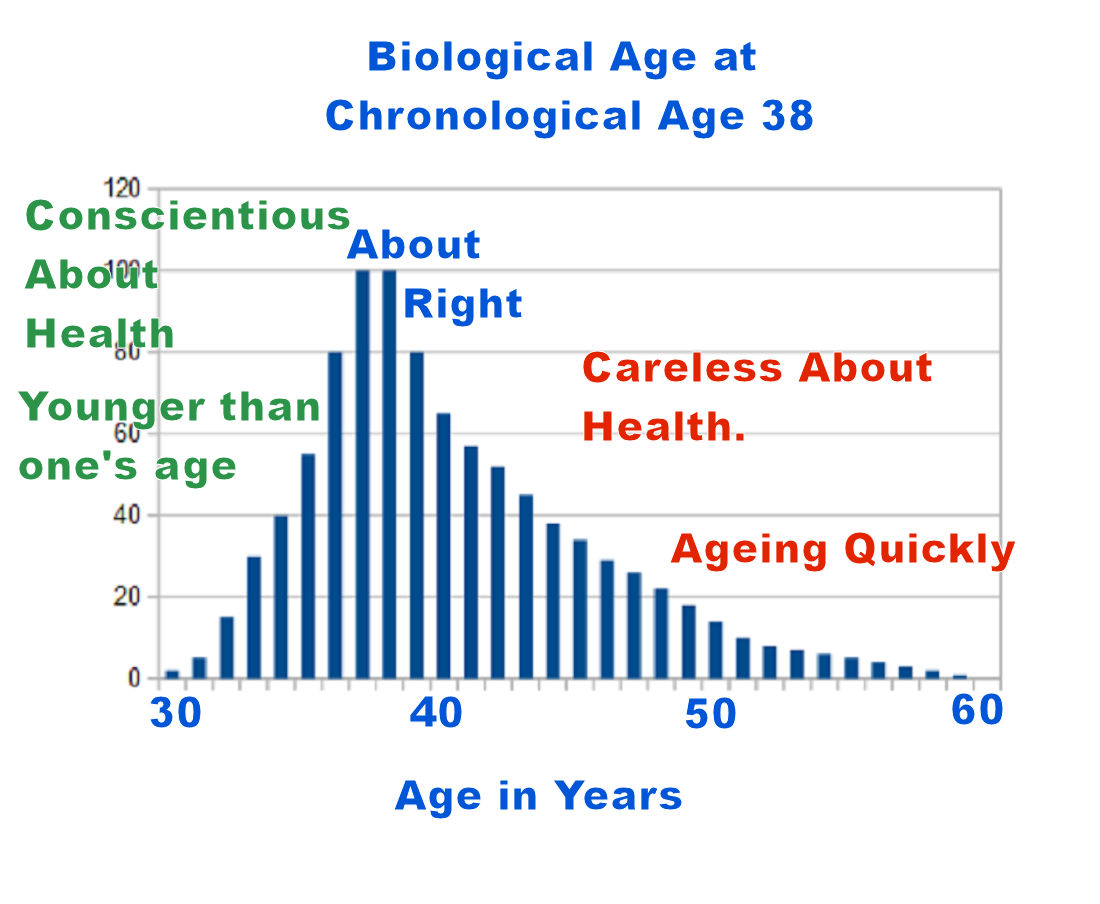
Click to Image to Enlarge
This graph is based on the Dunedin Study, where at age 38 most people had begun to show that they were ageing too quickly. That's confirmed by the NHANES graph about the Age Specific Prevalence of Metabolic Syndrome. After the age of 40 the rate of metabolic disorder increases a lot.
Make a Choice to Improve Your Health
Write a Personal Plan to do that.
There are many ways to begin. What you choose to do depends entirely on you.
First, you have to know that better health is possible. If you don't understand that, you have no agency to improve your decision making and the habits that create better health.
If you lack the courage to begin the outcome is certain. Take Charge, you can.
I know that you cannot know where a better health journey will lead you. That’s why we chose the tunnel image for the health coaching part of this website. You can't see what’s at the end of tunnel. If you can't begin the journey, you can't begin to control your own outcome.
My Parents Try to Get STRONG in their 80's
Clare Johnston (42 minutes)
Published by: The Honest Channel - January, 2025
My 81-year-old mum struggles with severe muscle loss in her back, making it difficult for her to walk independently. Now together with my 80-year-old dad and coached by physical therapist Chris Reis, they are starting a weight training regimen to improve their strength, mobility, and overall health. Will they be able to overcome the challenges and achieve their healthy aging goals? Subscribe to follow their progress!
Do It Yourself – Take Charge
There are not nearly enough doctors, nurses, dietitians, physiotherapist's, psychologists, or psychiatrists, to meet the health needs of the population. We can't train them, we can't afford to pay them, and most of us don't have the income to employ these people privately. That’s a bad news story, but it’s real.
On the other hand, if you are conscientious about your health, you can achieve a great deal and minimize the need for professional help. Make a plan, keep a written record, and seek help when you need it.
Your use of the medical system can be smaller, and your health much better. More-over, when you do go to a doctor, it will be obvious to him/her that you have worked hard to be healthy. That makes every difference to the conversation you have, and the options for future care he/she might offer you. That’s one of the values of being active in creating your own health.
Think Seriously About What You Eat
One of the most contentious issues has always been “What is the best human diet” and then for yourself, “What should I choose to eat.” The Dietary Guidelines for America became a standard for “what to eat” around the world, particularly in English speaking countries.
However, we are getting sicker and less healthy since then, and type II diabetes, obesity, cancer and cardio-vascular disease are plagues in our society. Many of us have discovered that the “healthy diet” that we tried to eat as young people is not a healthy diet when we get older. Not sure why? I seem to have identified a pattern, as young people we ate a lot of rubbish and seemed to get away with it, then as our health declined, we tried to be vegetarian. That worked but later it failed. Finally, we end up eating many more animal foods, and far less fruit and vegetables. Maybe as we age, the quality of the protein we eat becomes more important.
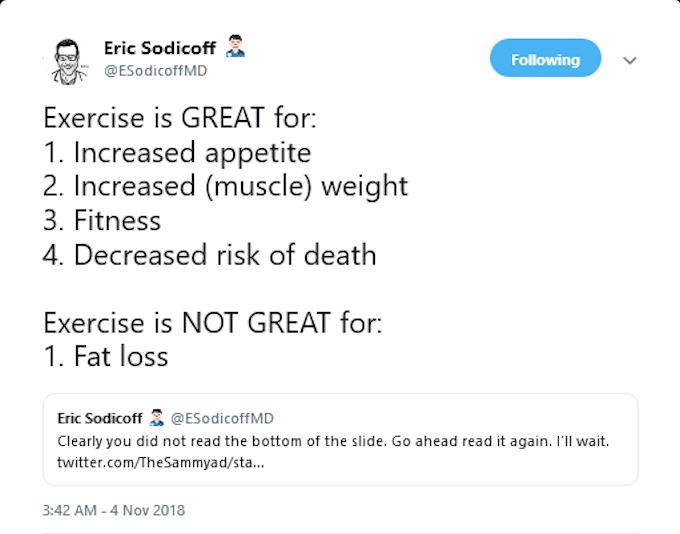
Plan to Exercise.
I did exercise and train in my 50's, but through my 60’s I did much less and slowly lost fitness and later my health. In my early 70’s I determined to recover my health, and I've been successful. BUT life is uncertain, negative events happen and at my age a sudden step down in health is likely.
So, for me keeping up the amount of physical exercise I'm doing (about 12 hours a week at the moment) is important. You need to make your own plan. Can I suggest the Fitify App as one way to begin. Or train so that you can join parkrun in your district. The difference in capability of people who have made an effort to be fit, and those who are unfit is about 20 years superior. More power, more speed, more energy and less pain.
Ignore the minimal fitness guides for young people, 30 minutes of high intensity interval training (HIIT) three times a week might be fine when you are 40 and working full time. Older people have the time, many hours, to engage in fitness activities that are enjoyable and challenging, and social. Try to do that.
Buy a heart rate chest strap. Exercise mostly in the Zone Two range, for several hours a week. Two or three times a week try to do five minutes of intense exercise, mostly in Zone Four, but moving into Zone Five if you can.
Join in Group Activities Involving Exercise.
For my wife Carolyn and I ballroom dancing has always been important, but we have also embraced long hill walks, cycling, and TaiChi. Carolyn has a basketball hoop in the yard and tries to shoot 100 baskets every day, and she also plays tennis. I've got some light weights and neoprene bands in the garage to add difficulty and variety to my exercise program when using an online App. I also go to a gym three times a week. Looking at the Fitness at Age 80 in Quartile's, Carolyn and I are clearly in the third quartile, maybe moving into the fourth.
Start to Write a Journal - Keep a Record
For more than 30 years, I've regularly written in various exercise books, about what interests me, and sometimes about my life and my fitness. When you are thinking about making changes in your life then keeping a journal, even for a short time is a sensible strategy. If at some stage you need to discuss your progress with a doctor, physiotherapist, dietician or a health coach, you have prepared the ground for success. You've built a foundation of knowledge. I strongly suggest you begin to build your own knowledge in your own book.
Write your own Personal Health Plan
Record what you are actually doing. Diet, Exercise, Sleep, Work, Family and Social life. Write it for your doctor to read. At the very top, explain why you are in the clinic TODAY.
Write about one page. It will probably grow, but all the key things should be on the first side. On the back of the sheet you might record some numbers.
Blood Pressure over a week.
Glucose levels, or Ketone levels in the last week
Take a six minute brisk walk. How far did you go in metres?
What's been the highlight of the last week?
Write it as it is, not as you wanted it to be.
What do you understand from this short lesson?
To search the Open Future Health website to find similar content. Choose 2 or 3 Keywords according to your interest.
Search multiple words like: "wordone+wordtwo+wordthree".
In Google, search multiple words like: "wordone+wordtwo+wordthree"
Alternatively ask Chat GP. Suggested prompt in natural language: "Briefly: I understand that (insert your own words here), is that a sensible view?"
Keep a brief record of what you have now understood.
Write a short note for yourself, in a document, or in a journal, so that you have a record of what you have understood.
Next Topic: Topic 3/ The Power of Exercise.

You can return to the Three Lessons Directory here. (Desktop)
 Return to the Open Future Health Portal. (Where you started)